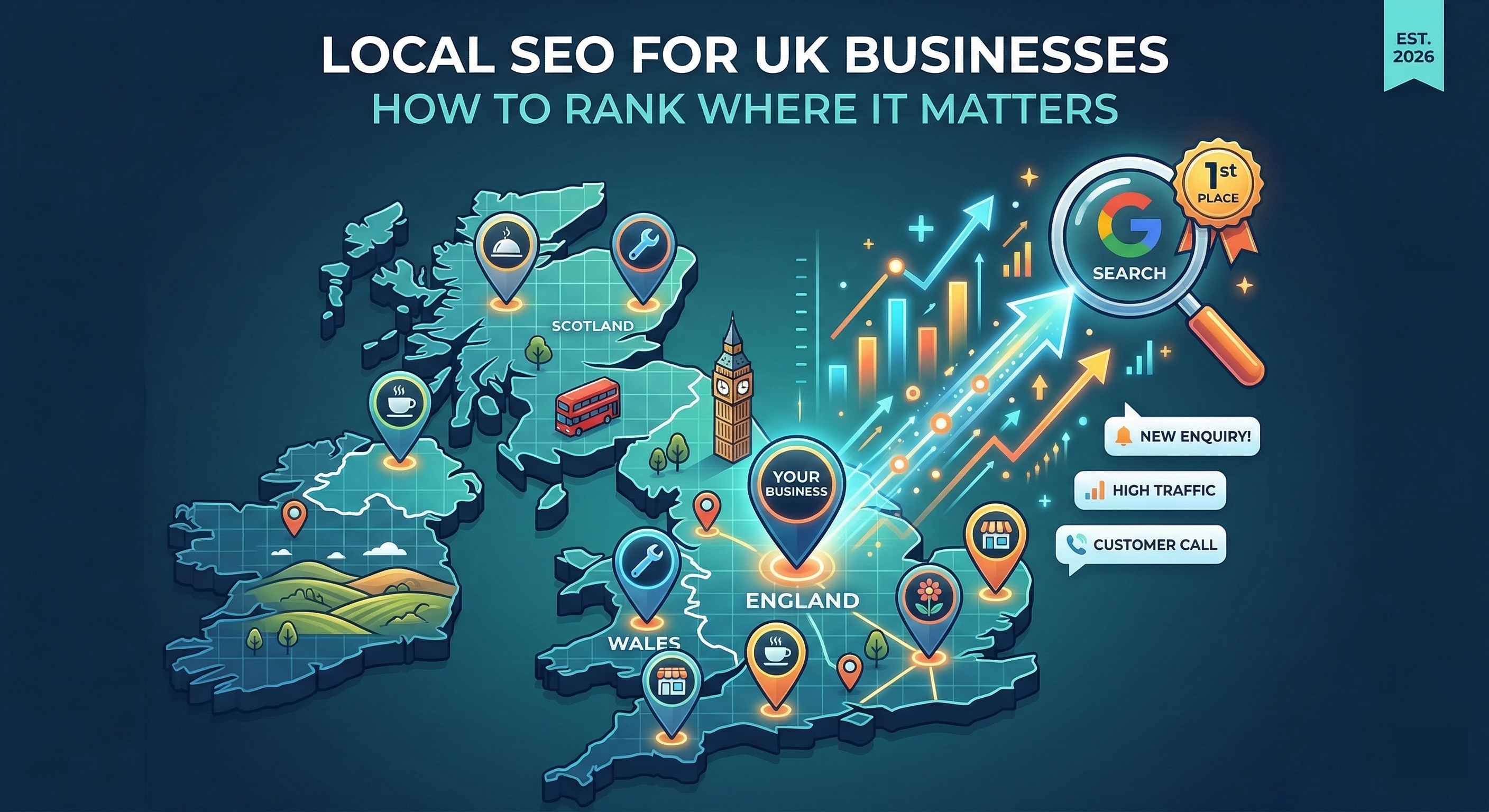
A Dummy’s Guide to SEO
The fundamentals of SEO and why it matters for your business.

Search Engine Optimisation, or SEO, often sounds like a complex language reserved for technical experts. In reality, the core principles are straightforward and accessible to any business owner. If you want your website to appear when potential customers search for your services on Google, you need a solid grasp of the basics. This guide breaks down the essential components of SEO into manageable steps to help you start climbing the search rankings today.
What is SEO and Why Does It Matter?
SEO is the process of improving your website to increase its visibility in search engine results. When people search for products or services related to your business, you want to be as high up the list as possible. Higher visibility leads to more clicks, more traffic, and ultimately more customers.
Unlike paid advertising, the traffic you get from SEO is organic, which means you do not pay for every individual click. It is a long term investment that builds credibility and authority for your brand. In a competitive digital marketplace, appearing on the first page of Google is often the difference between a thriving business and one that struggles to find leads.
Keyword Research: Speaking Your Customer's Language
The foundation of any SEO strategy is understanding what your audience is actually typing into search bars.These terms are known as keywords. If you sell "handmade leather bags" but your website only uses the term "artisan satchels," you might miss out on a massive amount of relevant traffic because you are not matching the user's search intent.
How to start: Use tools like Google Keyword Planner or simply look at the "People also ask" section on search results pages. Aim for a mix of broad terms and specific "long tail" phrases. For example, instead of just targeting "shoes," try "waterproof running shoes for beginners." These specific phrases often have less competition and much higher conversion rates.
On-Page SEO: Optimising Your Content
Once you have your keywords, you need to place them strategically on your website. This tells search engines exactly what your pages are about. However, you must avoid "keyword stuffing," which is the outdated practice of overusing terms in a way that feels unnatural or robotic.
Key areas to focus on:
Title Tags: This is the clickable blue link that appears in search results. Ensure it includes your primary keyword and stays under 60 characters.
Header Tags: Use H1, H2, and H3 tags to structure your content. This makes it easier for both readers and search engines to navigate your page.
Meta Descriptions: This is the short summary below the title link. While it is not a direct ranking factor, a well written description encourages people to click on your link instead of a competitor's link.
Image Alt Text: Describe your images using text. This helps search engines understand visual content and improves accessibility for visually impaired users.
Quality Content: Solving Problems for Readers
Google's primary goal is to provide the best possible answer to a user's query. Therefore, the most effective SEO strategy is simply to create high quality content. If your blog posts or service pages are genuinely helpful, people will stay on your site longer and other websites will be more likely to link to you.
The Golden Rule: Always write for humans first and search engines second. Ensure your spelling and grammar are perfect, use British English consistently, and provide original insights that your competitors might be missing. Frequent updates to your blog show search engines that your site is active, relevant, and authoritative.
Technical SEO and Backlinks
The "behind the scenes" part of your website also plays a role in your ranking. Your site must be fast, secure (using HTTPS), and easy to use on a mobile phone. Additionally, you should aim to get "backlinks." A backlink is when another reputable website links to yours. Google views these links as votes of confidence. The more high quality links you have from trusted sources, the more authoritative your site appears in the eyes of the algorithm.
SEO is not a one-time task but a continuous process of refinement and analysis. While the basics are easy to understand, staying ahead of the ever-changing Google algorithm requires time, expertise, and the right tools.
If you want to stop guessing and start growing your organic traffic, our team is here to help. GenWolf specialises in comprehensive SEO audits, keyword strategy, and content creation that delivers real results for your business.
GenWolf helps businesses turn underperforming websites into growth assets.
From SEO and conversion strategy to design, development, and performance, we help businesses build websites that actually generate leads.
Enquire now